Buy fitnessbikes.eu ?
We are moving the project
fitnessbikes.eu .
Are you interested in purchasing the domain
fitnessbikes.eu ?
domain@kv-gmbh.de · 0541-91531010
Buy fitnessbikes.eu ?
When do you conjugate "avoir"?
The verb "avoir" is conjugated when talking about possession or to form compound tenses such as the passé composé. In these cases, "avoir" is conjugated according to the subject of the sentence. For example, "J'ai un chat" (I have a cat) or "Nous avons mangé" (We have eaten). **
How do you conjugate falloir?
The verb "falloir" is an impersonal verb, meaning it is only used in the third person singular. It is conjugated as "il faut" in the present tense, "il fallait" in the imperfect tense, and "il faudra" in the future tense. There is no need to conjugate it for different subjects, as it always remains in the third person singular form. **

Similar search terms for Conjugate Pair
Top-Angebote
Products related to Conjugate Pair:
-
Lumisource Wendolyn Table Lamp Pair Glacier, Pair, GlacierThe fluted swirl design on the Wendolyn Table Lamp Pair looks stunning in any setting. Made of glass, these classically styled, glacier blue lamps have polished nickel metal accents and off-white fabric shades. UL listed. Each requires one 60W max....119,99 $*Shipping: 0,00 $Secure redirect to the provider
-
Crestview Collection Romy Table Lamp Pair, Pair, GreenA delicate charm and a unique versatile style detail the Romy Table Lamp Pair. Perfect for traditional, eclectic, and contemporary tastes, the lamps feature clear crystal square bases topped with radiant gold-finished stacked, curved resin shapes...385,99 $*Shipping: 0,00 $Secure redirect to the provider
-
Lumisource Ashland Table Lamp Pair, Pair, TaupeThe words sleek and sophisticated perfectly describe the Ashland Table Lamp Pair. These metal lamps have curvaceous hourglass silhouettes with a stunning brushed nickel finish. The taupe shades are satin fabric. UL listed. Each lamp requires one...149,00 $*Shipping: 0,00 $Secure redirect to the provider
-
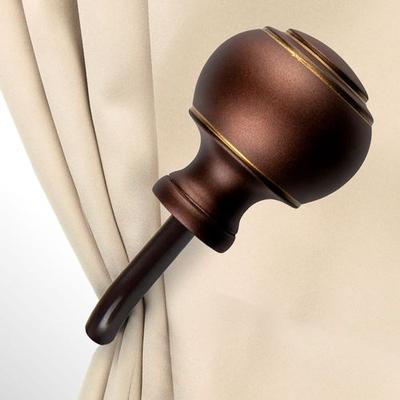
Rod Desyne Farrar Curtain Holdback Pair, Pair, CocoaThe Farrar Curtain Holdback Pair provides a classic complement. Each steel holdback has a round resin finial that exudes a timeless air with linear detailing. The holdback pair has a J shape that projects 3 to contain your curtains; each measures 3...62,99 $*Shipping: 13,95 $Secure redirect to the provider



-
How do you conjugate French adjectives?
In French, adjectives must agree in gender (masculine or feminine) and number (singular or plural) with the noun they modify. To conjugate a French adjective, you need to add the appropriate ending to match the gender and number of the noun it describes. For example, to make the adjective "petit" (small) agree with a masculine singular noun, you would use "petit." But if the noun is feminine singular, you would use "petite." And for a masculine plural noun, you would use "petits," and for a feminine plural noun, you would use "petites." **
-
How do you conjugate in Hebrew?
In Hebrew, verbs are conjugated based on the subject of the sentence and the tense of the action. There are different conjugation patterns for each tense (past, present, future) and for each subject (I, you, he/she/it, we, you all, they). The verb root remains the same, but the conjugation changes to match the subject and tense. Additionally, Hebrew verbs also change based on gender and number of the subject. Learning the conjugation patterns and practicing with different verbs is essential for mastering Hebrew verb conjugation. **
-
Can you help me conjugate avoir?
Sure! The verb "avoir" is conjugated as follows: - J'ai (I have) - Tu as (You have) - Il/Elle/On a (He/She/One has) - Nous avons (We have) - Vous avez (You have) - Ils/Elles ont (They have) **
-
How do you conjugate in French?
In French, verbs are conjugated to match the subject of the sentence, including the person (I, you, he/she, we, they) and the tense (present, past, future, etc.). To conjugate a regular verb in the present tense, you remove the infinitive ending (-er, -ir, -re) and add the appropriate ending for the subject (je, tu, il/elle, nous, vous, ils/elles). For example, for the verb "parler" (to speak), you would conjugate it as "je parle" (I speak), "tu parles" (you speak), "il/elle parle" (he/she speaks), "nous parlons" (we speak), "vous parlez" (you speak), "ils/elles parlent" (they speak). Irregular verbs have their own unique conjugation patterns that need to be memorized. **


How do you conjugate "perire" in Latin?
The verb "perire" in Latin is conjugated as follows in the present tense: - I perish: pereo - You perish: peris - He/she/it perishes: perit - We perish: perimus - You (plural) perish: peritis - They perish: pereunt **
How do you conjugate the verb "essayer"?
To conjugate the verb "essayer" in French, you would follow the regular -er verb conjugation pattern. For example: - Je essaie (I try) - Tu essaies (You try) - Il/Elle essaie (He/She tries) - Nous essayons (We try) - Vous essayez (You try) - Ils/Elles essaient (They try) **
Top-Angebote
Products related to Conjugate Pair:
-
Lumisource Ashland Table Lamp Pair, Pair, WhiteThe words sleek and sophisticated perfectly describe the Ashland Table Lamp Pair. These metal lamps have curvaceous hourglass silhouettes with a stunning brushed nickel finish. The taupe shades are satin fabric. UL listed. Each lamp requires one...149,00 $*Shipping: 0,00 $Secure redirect to the provider
-
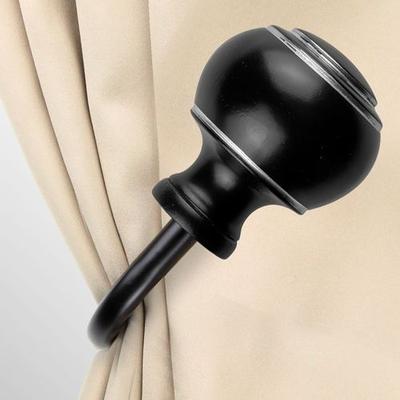
Rod Desyne Farrar Curtain Holdback Pair, Pair, BlackThe Farrar Curtain Holdback Pair provides a classic complement. Each steel holdback has a round resin finial that exudes a timeless air with linear detailing. The holdback pair has a J shape that projects 3 to contain your curtains; each measures 3...62,99 $*Shipping: 13,95 $Secure redirect to the provider
-
Lumisource Wendolyn Table Lamp Pair Glacier, Pair, GlacierThe fluted swirl design on the Wendolyn Table Lamp Pair looks stunning in any setting. Made of glass, these classically styled, glacier blue lamps have polished nickel metal accents and off-white fabric shades. UL listed. Each requires one 60W max....119,99 $*Shipping: 0,00 $Secure redirect to the provider
-
Crestview Collection Romy Table Lamp Pair, Pair, GreenA delicate charm and a unique versatile style detail the Romy Table Lamp Pair. Perfect for traditional, eclectic, and contemporary tastes, the lamps feature clear crystal square bases topped with radiant gold-finished stacked, curved resin shapes...385,99 $*Shipping: 0,00 $Secure redirect to the provider
-
When do you conjugate "avoir"?
The verb "avoir" is conjugated when talking about possession or to form compound tenses such as the passé composé. In these cases, "avoir" is conjugated according to the subject of the sentence. For example, "J'ai un chat" (I have a cat) or "Nous avons mangé" (We have eaten). **
-
How do you conjugate falloir?
The verb "falloir" is an impersonal verb, meaning it is only used in the third person singular. It is conjugated as "il faut" in the present tense, "il fallait" in the imperfect tense, and "il faudra" in the future tense. There is no need to conjugate it for different subjects, as it always remains in the third person singular form. **
-
How do you conjugate French adjectives?
In French, adjectives must agree in gender (masculine or feminine) and number (singular or plural) with the noun they modify. To conjugate a French adjective, you need to add the appropriate ending to match the gender and number of the noun it describes. For example, to make the adjective "petit" (small) agree with a masculine singular noun, you would use "petit." But if the noun is feminine singular, you would use "petite." And for a masculine plural noun, you would use "petits," and for a feminine plural noun, you would use "petites." **
-
How do you conjugate in Hebrew?
In Hebrew, verbs are conjugated based on the subject of the sentence and the tense of the action. There are different conjugation patterns for each tense (past, present, future) and for each subject (I, you, he/she/it, we, you all, they). The verb root remains the same, but the conjugation changes to match the subject and tense. Additionally, Hebrew verbs also change based on gender and number of the subject. Learning the conjugation patterns and practicing with different verbs is essential for mastering Hebrew verb conjugation. **
Similar search terms for Conjugate Pair
-
Lumisource Ashland Table Lamp Pair, Pair, TaupeThe words sleek and sophisticated perfectly describe the Ashland Table Lamp Pair. These metal lamps have curvaceous hourglass silhouettes with a stunning brushed nickel finish. The taupe shades are satin fabric. UL listed. Each lamp requires one...149,00 $*Shipping: 0,00 $Secure redirect to the provider
-
Rod Desyne Farrar Curtain Holdback Pair, Pair, CocoaThe Farrar Curtain Holdback Pair provides a classic complement. Each steel holdback has a round resin finial that exudes a timeless air with linear detailing. The holdback pair has a J shape that projects 3 to contain your curtains; each measures 3...62,99 $*Shipping: 13,95 $Secure redirect to the provider
-
Lumisource Ashland Table Lamp Pair, Pair, Light BlueThe words sleek and sophisticated perfectly describe the Ashland Table Lamp Pair. These metal lamps have curvaceous hourglass silhouettes with a stunning brushed nickel finish. The taupe shades are satin fabric. UL listed. Each lamp requires one...149,00 $*Shipping: 0,00 $Secure redirect to the provider
-
Lumisource Ashland Table Lamp Pair, Pair, Dark GrayThe words sleek and sophisticated perfectly describe the Ashland Table Lamp Pair. These metal lamps have curvaceous hourglass silhouettes with a stunning brushed nickel finish. The taupe shades are satin fabric. UL listed. Each lamp requires one...149,00 $*Shipping: 0,00 $Secure redirect to the provider
-
Can you help me conjugate avoir?
Sure! The verb "avoir" is conjugated as follows: - J'ai (I have) - Tu as (You have) - Il/Elle/On a (He/She/One has) - Nous avons (We have) - Vous avez (You have) - Ils/Elles ont (They have) **
-
How do you conjugate in French?
In French, verbs are conjugated to match the subject of the sentence, including the person (I, you, he/she, we, they) and the tense (present, past, future, etc.). To conjugate a regular verb in the present tense, you remove the infinitive ending (-er, -ir, -re) and add the appropriate ending for the subject (je, tu, il/elle, nous, vous, ils/elles). For example, for the verb "parler" (to speak), you would conjugate it as "je parle" (I speak), "tu parles" (you speak), "il/elle parle" (he/she speaks), "nous parlons" (we speak), "vous parlez" (you speak), "ils/elles parlent" (they speak). Irregular verbs have their own unique conjugation patterns that need to be memorized. **
-
How do you conjugate "perire" in Latin?
The verb "perire" in Latin is conjugated as follows in the present tense: - I perish: pereo - You perish: peris - He/she/it perishes: perit - We perish: perimus - You (plural) perish: peritis - They perish: pereunt **
-
How do you conjugate the verb "essayer"?
To conjugate the verb "essayer" in French, you would follow the regular -er verb conjugation pattern. For example: - Je essaie (I try) - Tu essaies (You try) - Il/Elle essaie (He/She tries) - Nous essayons (We try) - Vous essayez (You try) - Ils/Elles essaient (They try) **
* All prices are inclusive of VAT and, if applicable, plus shipping costs. The offer information is based on the details provided by the respective shop and is updated through automated processes. Real-time updates do not occur, so deviations can occur in individual cases. ** Note: Parts of this content were created by AI.