Buy fitnessbikes.eu ?
We are moving the project
fitnessbikes.eu .
Are you interested in purchasing the domain
fitnessbikes.eu ?
domain@kv-gmbh.de · 0541-91531010
Buy fitnessbikes.eu ?
What is the difference between proportional and inverse proportional?
Proportional and inverse proportional relationships are two types of relationships between two variables. In a proportional relationship, as one variable increases, the other variable also increases at a constant rate. This means that the ratio between the two variables remains the same. In an inverse proportional relationship, as one variable increases, the other variable decreases at a constant rate. This means that the product of the two variables remains constant. **
How can one recognize proportional and inverse proportional relationships?
Proportional relationships can be recognized when two quantities increase or decrease at the same rate. This means that when one quantity doubles, the other quantity also doubles. Inverse proportional relationships, on the other hand, can be recognized when one quantity increases while the other decreases at a constant rate, or vice versa. This means that when one quantity doubles, the other quantity is halved. One can recognize these relationships by plotting the data on a graph and observing if the points form a straight line through the origin for proportional relationships, or if the points form a curve for inverse proportional relationships. **

Similar search terms for Non-proportional
Top-Angebote
Products related to Non-proportional:
-
Market Central Non Slip Ab Roller Wheel Core Trainer For Home Gym Ab Workout Strength Training Non Slip Ab Roller Wheel Core Trainer For Home Gym Ab Workout Strength TrainingA stronger core doesnt come from complicated routines it comes from consistent, focused movement that challenges your entire midsection. This fitness essential is designed to help you train smarter, not harder, right from home. Built as a powerful...41,97 $*Shipping: 0,00 $Secure redirect to the provider
-
Multisell Products Hub Durable Wrist Recovery Strength Training, Fitness Forearm Strengthener With Non Slip Grip, Arm Exerciser Durable Wrist Recovery Strength Training, Fitness Forearm Strengthener With Non Slip Grip, Arm ExerciserEnhance Forearm Strength & Grip: Build your forearm strength and improve grip with this Fitness Forearm Strengthener. Designed with a nonslip grip, it offers superior control and comfort while training. Whether you're a fitness enthusiast or...79,97 $*Shipping: 0,00 $Secure redirect to the provider
-
Multicon Wholesale Hub Gymnastics Beam, Floor Folding Balance, Non Slip Base, Perfect For Home Practice And Training Gymnastics Beam, Floor Folding Balance, Non Slip Base, Perfect For Home Practice And TrainingMaster your gymnastics skills with the Floor Folding Balance Beam, a versatile and durable training tool that can elevate your practice in the comfort of your home. Whether you're a beginner learning the basics or an experienced gymnast perfecting...79,97 $*Shipping: 0,00 $Secure redirect to the provider
-
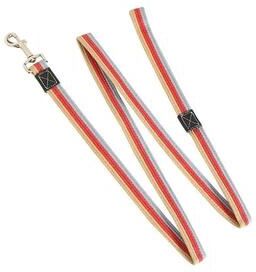
Happy Pet Pantry Non Slip Rubber Nylon Dog Leash Training & Walking Rope 2.5cmX200cm 32m long Dog Leash Pet Lead NonSlip Rubber Nylon Training Walking Rope work Dog Leashes For Small Medium Large big Dogs Material:Rubber ,Nylon and Copper hookDescription: Antiskid long Dog Leash for teddy ,chihuahua, poodle,Pomeranian, Bichon...24,97 $*Shipping: 0,00 $Secure redirect to the provider


-
What is the difference between proportional relationships and inverse proportional relationships?
Proportional relationships are those in which the two variables increase or decrease at a constant rate. In other words, when one variable doubles, the other variable also doubles. In contrast, inverse proportional relationships are those in which one variable increases as the other decreases, and vice versa. In an inverse proportional relationship, the product of the two variables remains constant. In other words, when one variable doubles, the other variable is halved. **
-
What are proportional relationships?
Proportional relationships are relationships between two quantities where they change in a consistent manner. This means that as one quantity increases or decreases, the other quantity also increases or decreases in a predictable way. In a proportional relationship, the ratio between the two quantities remains constant. This can be represented by a straight line when graphed. **
-
Which of the relationships is inversely proportional and which is directly proportional?
The relationship between the distance traveled and the time taken is inversely proportional, as the faster you travel, the less time it takes to reach a destination. On the other hand, the relationship between the force applied and the acceleration produced is directly proportional, as increasing the force applied will result in a corresponding increase in acceleration. **
-
Which of the assignments is inversely proportional and which is directly proportional?
The assignment of distance traveled and time taken is inversely proportional, as the distance traveled decreases as the time taken increases. On the other hand, the assignment of force and acceleration is directly proportional, as the force increases, the acceleration also increases. **


How can I recognize if a function is proportional or inversely proportional?
You can recognize if a function is proportional by checking if the ratio of the output to the input is constant. In other words, if the function can be written in the form y = kx, where k is a constant, then the function is proportional. On the other hand, if the function can be written in the form y = k/x, where k is a constant, then the function is inversely proportional. Additionally, if the graph of the function is a straight line passing through the origin, it is proportional, while if the graph is a hyperbola, it is inversely proportional. **
How can one determine whether it is a proportional or inverse proportional relationship?
One can determine whether a relationship is proportional or inverse proportional by examining the pattern of the data points. In a proportional relationship, as one variable increases, the other variable also increases at a constant rate. This results in a straight line passing through the origin when the data is plotted on a graph. In an inverse proportional relationship, as one variable increases, the other variable decreases at a constant rate. This relationship is represented by a curve that approaches but never touches either axis when graphed. **
Top-Angebote
Products related to Non-proportional:
-
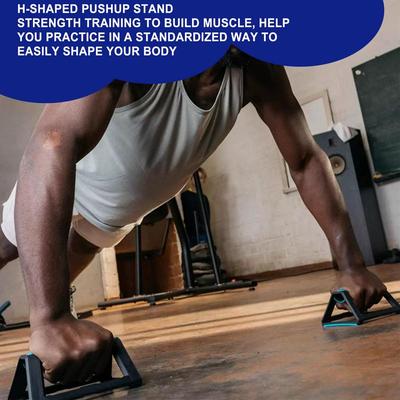
Market Central Push Up Bars Non Slip Pushup Handles For Muscle Building Home Workout Training Push Up Bars Non Slip Pushup Handles For Muscle Building Home Workout TrainingBuild stronger arms, chest, and shoulders with a simple tool designed to make every workout more effective. These push up bars provide a comfortable elevated grip that helps improve pushup form while reducing wrist pressure. Perfect for men and...47,97 $*Shipping: 0,00 $Secure redirect to the provider
-
Clever Finds Silicone Non Slip Weight Lifting Straps For Deadlift Pull Ups And Strength Training Silicone Non Slip Weight Lifting Straps For Deadlift Pull Ups And Strength TrainingPush through demanding sets with greater confidence and control. These weight lifting straps help reinforce your grip when your hands begin to fatigue during heavy pulling exercises. The silicone nonslip surface supports a steadier connection with...69,97 $*Shipping: 0,00 $Secure redirect to the provider
-
Market Central Non Slip Ab Roller Wheel Core Trainer For Home Gym Ab Workout Strength Training Non Slip Ab Roller Wheel Core Trainer For Home Gym Ab Workout Strength TrainingA stronger core doesnt come from complicated routines it comes from consistent, focused movement that challenges your entire midsection. This fitness essential is designed to help you train smarter, not harder, right from home. Built as a powerful...41,97 $*Shipping: 0,00 $Secure redirect to the provider
-
Multisell Products Hub Durable Wrist Recovery Strength Training, Fitness Forearm Strengthener With Non Slip Grip, Arm Exerciser Durable Wrist Recovery Strength Training, Fitness Forearm Strengthener With Non Slip Grip, Arm ExerciserEnhance Forearm Strength & Grip: Build your forearm strength and improve grip with this Fitness Forearm Strengthener. Designed with a nonslip grip, it offers superior control and comfort while training. Whether you're a fitness enthusiast or...79,97 $*Shipping: 0,00 $Secure redirect to the provider
-
What is the difference between proportional and inverse proportional?
Proportional and inverse proportional relationships are two types of relationships between two variables. In a proportional relationship, as one variable increases, the other variable also increases at a constant rate. This means that the ratio between the two variables remains the same. In an inverse proportional relationship, as one variable increases, the other variable decreases at a constant rate. This means that the product of the two variables remains constant. **
-
How can one recognize proportional and inverse proportional relationships?
Proportional relationships can be recognized when two quantities increase or decrease at the same rate. This means that when one quantity doubles, the other quantity also doubles. Inverse proportional relationships, on the other hand, can be recognized when one quantity increases while the other decreases at a constant rate, or vice versa. This means that when one quantity doubles, the other quantity is halved. One can recognize these relationships by plotting the data on a graph and observing if the points form a straight line through the origin for proportional relationships, or if the points form a curve for inverse proportional relationships. **
-
What is the difference between proportional relationships and inverse proportional relationships?
Proportional relationships are those in which the two variables increase or decrease at a constant rate. In other words, when one variable doubles, the other variable also doubles. In contrast, inverse proportional relationships are those in which one variable increases as the other decreases, and vice versa. In an inverse proportional relationship, the product of the two variables remains constant. In other words, when one variable doubles, the other variable is halved. **
-
What are proportional relationships?
Proportional relationships are relationships between two quantities where they change in a consistent manner. This means that as one quantity increases or decreases, the other quantity also increases or decreases in a predictable way. In a proportional relationship, the ratio between the two quantities remains constant. This can be represented by a straight line when graphed. **
Similar search terms for Non-proportional
-
Multicon Wholesale Hub Gymnastics Beam, Floor Folding Balance, Non Slip Base, Perfect For Home Practice And Training Gymnastics Beam, Floor Folding Balance, Non Slip Base, Perfect For Home Practice And TrainingMaster your gymnastics skills with the Floor Folding Balance Beam, a versatile and durable training tool that can elevate your practice in the comfort of your home. Whether you're a beginner learning the basics or an experienced gymnast perfecting...79,97 $*Shipping: 0,00 $Secure redirect to the provider
-
Happy Pet Pantry Non Slip Rubber Nylon Dog Leash Training & Walking Rope 2.5cmX200cm 32m long Dog Leash Pet Lead NonSlip Rubber Nylon Training Walking Rope work Dog Leashes For Small Medium Large big Dogs Material:Rubber ,Nylon and Copper hookDescription: Antiskid long Dog Leash for teddy ,chihuahua, poodle,Pomeranian, Bichon...24,97 $*Shipping: 0,00 $Secure redirect to the provider
-
Uplifted Finds Non Invasive EMS Pelvic Floor Muscle Stimulator Kegel Training Chair 110 VRestore confidence and comfort with the Non Invasive EMS Pelvic Floor Muscle Stimulator Kegel Training Chair. Designed for postpartum repair, muscle strengthening, and pelvic health improvement, this advanced EMS chair provides noninvasive...493,97 $*Shipping: 0,00 $Secure redirect to the provider
-
Happy Pet Pantry Non Slip Rubber Nylon Dog Leash Training & Walking Rope 1.5cmX150cm 42m long Dog Leash Pet Lead NonSlip Rubber Nylon Training Walking Rope work Dog Leashes For Small Medium Large big Dogs Material:Rubber ,Nylon and Copper hookDescription: Antiskid long Dog Leash for teddy ,chihuahua, poodle,Pomeranian, Bichon...24,97 $*Shipping: 0,00 $Secure redirect to the provider
-
Which of the relationships is inversely proportional and which is directly proportional?
The relationship between the distance traveled and the time taken is inversely proportional, as the faster you travel, the less time it takes to reach a destination. On the other hand, the relationship between the force applied and the acceleration produced is directly proportional, as increasing the force applied will result in a corresponding increase in acceleration. **
-
Which of the assignments is inversely proportional and which is directly proportional?
The assignment of distance traveled and time taken is inversely proportional, as the distance traveled decreases as the time taken increases. On the other hand, the assignment of force and acceleration is directly proportional, as the force increases, the acceleration also increases. **
-
How can I recognize if a function is proportional or inversely proportional?
You can recognize if a function is proportional by checking if the ratio of the output to the input is constant. In other words, if the function can be written in the form y = kx, where k is a constant, then the function is proportional. On the other hand, if the function can be written in the form y = k/x, where k is a constant, then the function is inversely proportional. Additionally, if the graph of the function is a straight line passing through the origin, it is proportional, while if the graph is a hyperbola, it is inversely proportional. **
-
How can one determine whether it is a proportional or inverse proportional relationship?
One can determine whether a relationship is proportional or inverse proportional by examining the pattern of the data points. In a proportional relationship, as one variable increases, the other variable also increases at a constant rate. This results in a straight line passing through the origin when the data is plotted on a graph. In an inverse proportional relationship, as one variable increases, the other variable decreases at a constant rate. This relationship is represented by a curve that approaches but never touches either axis when graphed. **
* All prices are inclusive of VAT and, if applicable, plus shipping costs. The offer information is based on the details provided by the respective shop and is updated through automated processes. Real-time updates do not occur, so deviations can occur in individual cases. ** Note: Parts of this content were created by AI.