Buy fitnessbikes.eu ?
We are moving the project
fitnessbikes.eu .
Are you interested in purchasing the domain
fitnessbikes.eu ?
domain@kv-gmbh.de · 0541-91531010
Buy fitnessbikes.eu ?
How does the oxidation of acetone with CuO proceed?
The oxidation of acetone with CuO proceeds through a redox reaction where CuO acts as an oxidizing agent. The CuO oxidizes acetone by removing hydrogen atoms from the carbon atoms in the acetone molecule. This process results in the formation of products such as carbon dioxide and water. The overall reaction can be represented as: 2CuO + C3H6O → 3Cu + CO2 + 2H2O. **
In which metal ions are FeO, Fe2O3, and CuO contained?
FeO and Fe2O3 contain iron (Fe) ions, while CuO contains copper (Cu) ions. These metal ions are responsible for giving the compounds their characteristic properties and colors. Iron oxide (FeO and Fe2O3) compounds are commonly found in rust and various minerals, while copper oxide (CuO) is often used in ceramics and as a pigment in glass and ceramics. **

Similar search terms for Cuo
Top-Angebote
Products related to Cuo:
-
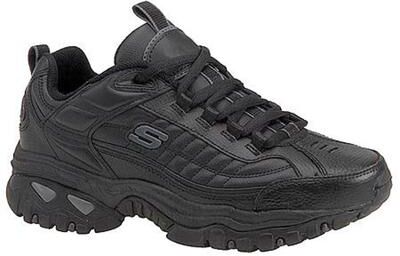
Skechers Sport After Burn-M. Fit 2.0 - Mens 7.5 Black Training W2*Explore wild terrain in comfort with Skechers After Burn M.Fit 2.0.. Leather, synthetic, and mesh upper. Skechers Memory Foam™ insole. Goodyear rubber outsole Skechers Sport After Burn-M. Fit 2.0 - Mens 7.5 Black Training W259,47 $*Shipping: 6,95 $Secure redirect to the provider




-
How do you calculate the chemical mass of CuO (copper(II) oxide)?
To calculate the chemical mass of CuO (copper(II) oxide), you need to determine the atomic mass of each element present in the compound. Copper (Cu) has an atomic mass of approximately 63.55 g/mol, while oxygen (O) has an atomic mass of about 16.00 g/mol. Since there is one atom of copper and one atom of oxygen in CuO, you can add the atomic masses of Cu and O together to find the chemical mass of CuO. Therefore, the chemical mass of CuO is approximately 63.55 g/mol (Cu) + 16.00 g/mol (O) = 79.55 g/mol. **
-
Why is there still a 2 in front of the CuO and in front of the Cu in CuO C + Cu CO2, even though they should balance each other out?
The reason there is a 2 in front of CuO and Cu in the chemical equation C + CuO → Cu + CO2 is to balance the equation. This ensures that the same number of each type of atom is present on both sides of the equation. The 2 in front of CuO indicates that there are 2 moles of CuO, and the 2 in front of Cu indicates that there are 2 moles of Cu. This balancing is necessary to accurately represent the chemical reaction that is taking place. **
-
What is the reducing agent and the oxidizing agent in CuO Fe Cu FeO?
In the reaction CuO + Fe -> Cu + FeO, the reducing agent is Fe because it undergoes oxidation by losing electrons to form FeO. The oxidizing agent is CuO because it gains electrons from Fe to form Cu. The Fe is oxidized from Fe to FeO, while CuO is reduced from CuO to Cu. **
-
How many grams of copper oxide (CuO) are needed to produce 10g of copper?
To calculate the amount of copper oxide needed to produce 10g of copper, we can use the molar mass of copper oxide to find the amount of copper in it. The molar mass of CuO is 79.55g/mol, and the molar mass of copper is 63.55g/mol. This means that in 79.55g of CuO, there are 63.55g of copper. To find the amount of CuO needed to produce 10g of copper, we can use the ratio 63.55g/79.55g = 10g/x, where x is the amount of CuO needed. Solving for x, we find that approximately 12.6g of CuO are needed to produce 10g of copper. **


Who said gesundheit?
"Gesundheit" is a German word that means "health" or "bless you" when someone sneezes. It is commonly said in English-speaking countries after someone sneezes. There is no specific person who said "gesundheit," as it is a cultural practice that has been adopted over time. **
¿Quién dijo "gesundheit"?
La palabra "gesundheit" es una expresión alemana que se utiliza para desearle salud a alguien después de que estornuda. No está asociada a una persona en particular, sino que es una expresión comúnmente utilizada en varios países de habla inglesa. **
Top-Angebote
Products related to Cuo:
-
How does the oxidation of acetone with CuO proceed?
The oxidation of acetone with CuO proceeds through a redox reaction where CuO acts as an oxidizing agent. The CuO oxidizes acetone by removing hydrogen atoms from the carbon atoms in the acetone molecule. This process results in the formation of products such as carbon dioxide and water. The overall reaction can be represented as: 2CuO + C3H6O → 3Cu + CO2 + 2H2O. **
-
In which metal ions are FeO, Fe2O3, and CuO contained?
FeO and Fe2O3 contain iron (Fe) ions, while CuO contains copper (Cu) ions. These metal ions are responsible for giving the compounds their characteristic properties and colors. Iron oxide (FeO and Fe2O3) compounds are commonly found in rust and various minerals, while copper oxide (CuO) is often used in ceramics and as a pigment in glass and ceramics. **
-
How do you calculate the chemical mass of CuO (copper(II) oxide)?
To calculate the chemical mass of CuO (copper(II) oxide), you need to determine the atomic mass of each element present in the compound. Copper (Cu) has an atomic mass of approximately 63.55 g/mol, while oxygen (O) has an atomic mass of about 16.00 g/mol. Since there is one atom of copper and one atom of oxygen in CuO, you can add the atomic masses of Cu and O together to find the chemical mass of CuO. Therefore, the chemical mass of CuO is approximately 63.55 g/mol (Cu) + 16.00 g/mol (O) = 79.55 g/mol. **
-
Why is there still a 2 in front of the CuO and in front of the Cu in CuO C + Cu CO2, even though they should balance each other out?
The reason there is a 2 in front of CuO and Cu in the chemical equation C + CuO → Cu + CO2 is to balance the equation. This ensures that the same number of each type of atom is present on both sides of the equation. The 2 in front of CuO indicates that there are 2 moles of CuO, and the 2 in front of Cu indicates that there are 2 moles of Cu. This balancing is necessary to accurately represent the chemical reaction that is taking place. **
Similar search terms for Cuo
-
Skechers Sport After Burn-M. Fit 2.0 - Mens 7.5 Black Training W2*Explore wild terrain in comfort with Skechers After Burn M.Fit 2.0.. Leather, synthetic, and mesh upper. Skechers Memory Foam™ insole. Goodyear rubber outsole Skechers Sport After Burn-M. Fit 2.0 - Mens 7.5 Black Training W259,47 $*Shipping: 6,95 $Secure redirect to the provider
-
Skechers Sport After Burn-M. Fit 2.0 - Mens 11 Black Training W2*Explore wild terrain in comfort with Skechers After Burn M.Fit 2.0.. Leather, synthetic, and mesh upper. Skechers Memory Foam™ insole. Goodyear rubber outsole Skechers Sport After Burn-M. Fit 2.0 - Mens 11 Black Training W259,47 $*Shipping: 6,95 $Secure redirect to the provider
-
What is the reducing agent and the oxidizing agent in CuO Fe Cu FeO?
In the reaction CuO + Fe -> Cu + FeO, the reducing agent is Fe because it undergoes oxidation by losing electrons to form FeO. The oxidizing agent is CuO because it gains electrons from Fe to form Cu. The Fe is oxidized from Fe to FeO, while CuO is reduced from CuO to Cu. **
-
How many grams of copper oxide (CuO) are needed to produce 10g of copper?
To calculate the amount of copper oxide needed to produce 10g of copper, we can use the molar mass of copper oxide to find the amount of copper in it. The molar mass of CuO is 79.55g/mol, and the molar mass of copper is 63.55g/mol. This means that in 79.55g of CuO, there are 63.55g of copper. To find the amount of CuO needed to produce 10g of copper, we can use the ratio 63.55g/79.55g = 10g/x, where x is the amount of CuO needed. Solving for x, we find that approximately 12.6g of CuO are needed to produce 10g of copper. **
-
Who said gesundheit?
"Gesundheit" is a German word that means "health" or "bless you" when someone sneezes. It is commonly said in English-speaking countries after someone sneezes. There is no specific person who said "gesundheit," as it is a cultural practice that has been adopted over time. **
-
¿Quién dijo "gesundheit"?
La palabra "gesundheit" es una expresión alemana que se utiliza para desearle salud a alguien después de que estornuda. No está asociada a una persona en particular, sino que es una expresión comúnmente utilizada en varios países de habla inglesa. **
* All prices are inclusive of VAT and, if applicable, plus shipping costs. The offer information is based on the details provided by the respective shop and is updated through automated processes. Real-time updates do not occur, so deviations can occur in individual cases. ** Note: Parts of this content were created by AI.